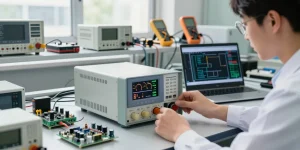
Elmendorf Tear Tester Case Study: Real-World Textile Strength Insights for 2026

Understanding the Elmendorf Tear Tester
The Elmendorf Tear Tester, a crucial piece of equipment in quality control and testing laboratories, plays a vital role in assessing the tear strength of various materials. As industries increasingly demand reliable and precise testing methods, this device has positioned itself as an industry standard due to its accuracy and efficiency. By determining the force required to propagate a tear in fabrics, plastics, and papers, the Elmendorf Tear Tester enables manufacturers to ensure their products meet stringent quality standards. In this article, we’ll explore the functionality, applications, and evolving technology surrounding the Elmendorf Tear Tester, with a special focus on the innovations brought by the ElmenGuide model.
What is the Elmendorf Tear Tester?
The Elmendorf Tear Tester, also referred to as the Tearing Strength Tester, is primarily used to measure the tearing resistance of materials, particularly woven fabrics, plastics, and thick paper. The testing principle involves a pendulum that falls from a predetermined height, creating a tear in the sample material. The force exerted during this process is measured to determine the material’s tear strength. By quantifying the force required to propagate a pre-existing tear, manufacturers can ascertain the durability and reliability of their products.
How Does the Elmendorf Tear Testing Method Work?
The testing method employed by the Elmendorf Tear Tester utilizes a ballistic pendulum system. Initially, a sample is clamped securely in place. A notch is then cut into the material to facilitate tearing. When the pendulum is released, it swings downwards, using gravitational potential energy to create a tearing motion. The energy expended during this swinging motion is recorded, translating directly into the tear strength of the material being tested. This procedure allows for consistent and reliable results, crucial for ensuring product quality.
Applications of the Elmendorf Tear Tester in Different Industries
- Textile Industry: In textile manufacturing, the Elmendorf Tear Tester is used to evaluate the tear resistance of various fabrics, such as nylon, cotton, and polyester. This testing is essential for ensuring that fabrics withstand wear and tear during use.
- Packaging: The device is used extensively to assess the durability of plastic films and packaging materials. Tearing strength is critical in determining how well packaging will protect contents during shipping and handling.
- Paper Production: Manufacturers of paper products utilize the tester to ensure that their products, especially thicker papers and boxes, can maintain integrity under stress, thus ensuring customer satisfaction.
Features and Specifications of the ElmenGuide Elmendorf Tear Tester
Technical Specifications and Performance Metrics
The elmendorf tear tester from ChiuVention boasts a range of technical specifications that enhance its usability and reliability. With a measurement range extending from 8N to 128N and an accuracy within ±0.2%, the ElmenGuide provides precise evaluations that adhere to international testing standards such as ISO 13937-1 and ASTM D 1424.
Automation and User-Friendly Design
One of the standout features of the ElmenGuide is its automation. Unlike traditional testers, which often require manual data entry and adjustments, the ElmenGuide automatically recognizes the sample weight and calibrates measurements accordingly. This automation not only saves time but also significantly reduces the potential for human error, enabling laboratories to maintain high standards of accuracy in their testing protocols.
Compliance with International Testing Standards
Compliance with various international testing standards is imperative in quality control. The ElmenGuide meets and exceeds standards such as BS ISO 13937-1 and GB/T 3917.1, making it an ideal choice for industries that prioritize adherence to regulatory benchmarks. The tester supports audit compliance and facilitates third-party verification, thus enhancing the credibility of test results.
Comparative Analysis: ElmenGuide vs Traditional Tear Testers
Advantages of Fully Automated Testing Solutions
Fully automated testing solutions like the ElmenGuide provide numerous advantages compared to traditional tear testers. First and foremost, they eliminate the need for manual calculations and adjustments, streamlining the testing process. Additionally, automated systems often feature enhanced data storage and reporting capabilities, allowing for easier analysis of results and sharing with relevant stakeholders, thus improving operational efficiency.
Cost-Benefit Analysis of Digital Versus Manual Methods
From a financial perspective, investing in automated testing equipment can yield significant long-term savings. While the initial investment may be higher, the reduction in labor costs, minimized errors, and faster testing times contribute to a more efficient operation. Furthermore, the reliability of automated results leads to better product quality, reducing instances of product returns and enhancing customer satisfaction.
Performance Reliability and Accuracy Comparison
In terms of performance, the ElmenGuide outperforms traditional models by maintaining a consistent accuracy level of ±0.2%. The design minimizes variables that can influence test results, such as the alignment of the pendulum’s center of gravity. As a result, manufacturers can be confident in the integrity of their testing outcomes, leading to more informed decision-making regarding material selection and quality assurance processes.
Case Studies: Real-World Applications of Elmendorf Testing
Field Applications in Textile Manufacturing
In practical applications, textile manufacturers have noted significant improvements in their quality control processes after integrating the ElmenGuide into their testing protocols. For instance, a leading clothing manufacturer reported a 30% increase in efficiency due to the reduced time spent on manual calculations and the immediate availability of results from the automated system.
Success Stories from Quality Control Labs
Quality control labs have experienced enhanced operational fluency through the use of the ElmenGuide. A notable example includes a testing facility that serves multiple industries, which reported a decrease in testing time from several hours to under one hour per batch, thanks to the automation features of the tester.
Feedback from Industry Experts on Testing Efficiency
Industry experts have lauded the ElmenGuide for its intuitive design and efficiency. Feedback has consistently emphasized the importance of quick report generation and ease of use for new technicians, promoting a positive learning environment that fosters confidence in testing accuracy.
Future Trends in Tear Testing Technology
Innovations in Textile Testing for 2026 and Beyond
As we approach 2026, emerging technologies promise to revolutionize the landscape of textile testing. Innovations such as machine learning algorithms may soon allow for predictive analysis of tear strength based on material composition and structure, which could minimize the need for extensive physical testing.
Impact of IoT and Digital Transformation in Laboratories
The integration of IoT solutions into testing equipment is another key trend. By connecting testers to the cloud, laboratories can access real-time data analytics and trend monitoring, allowing for proactive adjustments in production processes based on testing outcomes.
Preparing for Upcoming Industry Standards and Regulations
As global standards evolve, manufacturers must remain agile to ensure compliance. The ElmenGuide’s design accommodates updates in regulations, ensuring that users can adapt to new requirements without significant reconfiguration of their testing procedures.
How to Maintain Your Elmendorf Tear Tester?
Regular maintenance is crucial to ensure the long-term functionality of the Elmendorf Tear Tester. Operators should routinely clean and calibrate the equipment, check for wear and tear on the pendulum mechanism, and ensure that the software is up to date to maximize performance and accuracy.
What Are Common Issues with the Elmendorf Tear Tester?
Some common issues that users may encounter with the Elmendorf Tear Tester include misalignment of the pendulum, software glitches, and wear on the cutting blades. Addressing these issues promptly through regular maintenance and troubleshooting can help avoid disruptions in testing operations.
What Training Is Needed to Operate an Elmendorf Tear Tester?
While the ElmenGuide is designed with user-friendliness in mind, operators should still undergo minimal training to familiarize themselves with the device’s features and functionalities. Training sessions often cover the setup process, interpretation of results, and maintenance protocols, ensuring that operators can utilize the equipment effectively and efficiently.